.png?width=632&name=Untitled%20design%20(12).png)
By Taylor Hinds
In their book, Stellar: A World Beyond Limits and How to Get There, our founders James Arbib and Tony Seba describe humanity’s transition from an extraction-based system of scarcity to a creation-based system of superabundance. They map out how the convergence of key technologies in energy, transportation, food, and labor will not only solve our most pressing challenges, like climate change and inequality, but open a new possibility space where we can meet the needs of every person on the planet at a fraction of today’s cost. This vision is not science fiction; it is the inevitable result of the technology disruptions already underway.
A Stellar City is the physical manifestation of this new system. Whether built from scratch or transformed from an existing metropolis, it is an urban environment optimized to harness the benefits of these disruptions rather than bolting them onto outdated infrastructure. It is powered by local, superabundant clean energy; moves people through shared, autonomous electric networks (Transportation as a Service); secures food via precision fermentation; and liberates human potential by automating physical and cognitive labor through AI and humanoid robotics. Beyond just adopting these new technologies, becoming a Stellar City requires a fundamental transformation of the city’s Organizing System, requiring entirely new forms of leadership, governance, and decision-making to manage this age of superabundance.
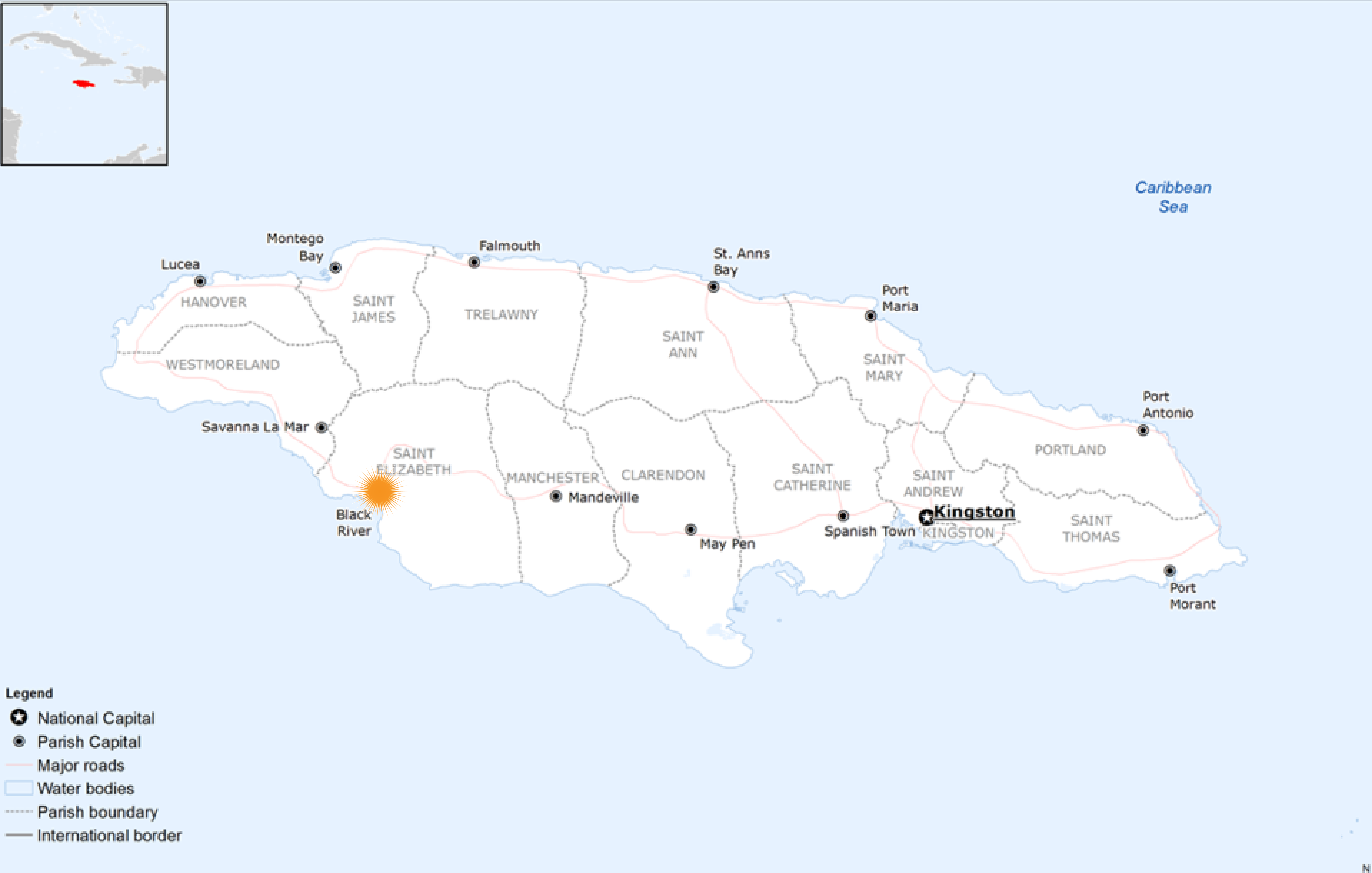
The potential for a Stellar City exists in every region and at every scale, requiring only that leaders have the foresight to choose this path of superabundance. In the wake of tragedy, Black River, Jamaica presents a unique opportunity to demonstrate this vision in the Caribbean by building a Stellar City from the ground up.
In October 2025, Hurricane Melissa tore through the parish of St. Elizabeth, Jamaica. The storm destroyed homes, shops, and critical infrastructure, including the hospital, police station, and library. For the residents of Black River, the capital of St. Elizabeth, the devastation was total. But amidst the wreckage lies opportunity. Historically, Black River was a beacon of innovation as an economically vital port and the first town in Jamaica to electrify in 1893 and introduce automobiles in 1903. While Black River is currently a small town of only 5,000 people (150,000 in St. Elizabeth Parish), for years the government has considered restoring it to glory as a purpose built, brand new city.
However, rebuilding the old Black River by reconstructing the centralized and fragile systems of the 20th century would be a strategic error. A linear mindset would suggest that we could simply replace what was lost, but instead Jamaica can treat this tragedy as a clean slate to leapfrog the industrial age entirely and build a Stellar City powered by superabundant clean energy, moved by autonomous electric transport, and fed by precision fermentation.
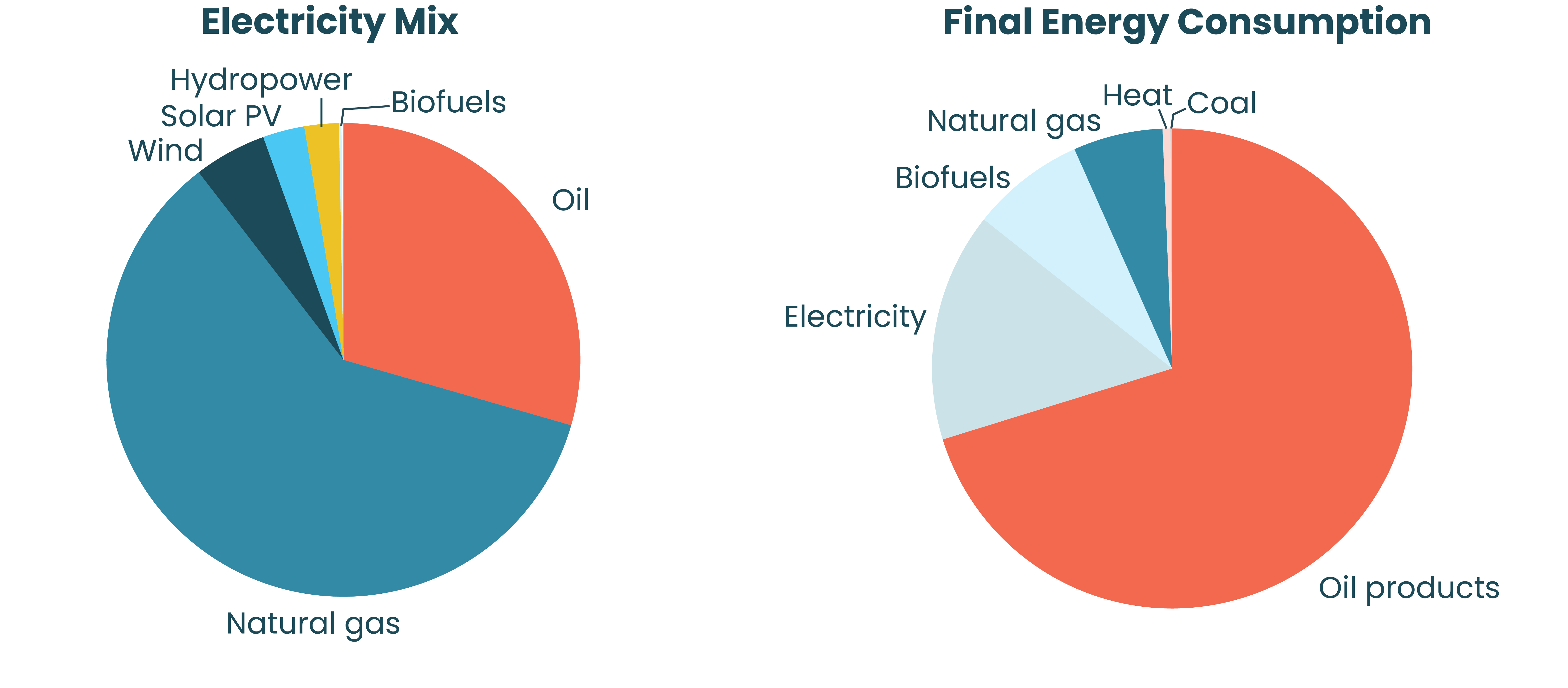
When Hurricane Melissa hit, the power was knocked out for 550,000 people across Jamaica. Transmission lines running from distant south coast power plants snapped, leaving St. Elizabeth in darkness that persisted weeks later. This kind of failure is a feature of centralized fossil fuel energy systems - particularly ones with aging infrastructure, exposed overhead lines and unmanaged vegetation as was the case in western Jamaica. Jamaica’s current energy system relies primarily on imported oil and natural gas, creating a model that is dirty, economically draining and inherently fragile. In a centralized grid, a single point of failure can blackout a region for months.
As Jamaica rebuilds, it should deploy a Stellar Energy system based on Solar, Wind, and Batteries (SWB). Unlike fossil fuels, SWB technologies are stocks rather than flows, meaning that once built they generate energy at near-zero marginal cost. Furthermore, because a reliable SWB system must be sized to generate power during the most challenging times of the year, it naturally produces a massive surplus of energy throughout the rest of the year. We call this SWB Superpower, and this surplus energy can be used to support new businesses and even entire industries in the region.
This system offers inherent resilience because SWB systems are distributed and modular. An impact on one side of the island does not blackout the other. We saw this with Melissa already given that after the storm, the few homes with rooftop solar and batteries were back online almost immediately. This means they, and their neighbors, had access to air conditioning, refrigeration, light and other important services the morning after the storm. Additionally, solar is already the cheapest form of energy in history, and by 2030 the cost of SWB energy will be a fraction of fossil fuels. With a Stellar energy system in place, Jamaica could stop spending on fuel imports and instead use that capital to rebuild infrastructure, support livelihoods, and create a brand new, world class city in St. Elizabeth Parish.

Jamaica spends a crippling amount of its GDP importing used gas cars and fuel. Rebuilding Black River’s roads for private car ownership would be investing in a dying technology. We are on the cusp of the fastest and deepest disruption in transportation history. Within 10 years of regulatory approval, 95% of U.S. passenger miles will be served by Transport-as-a-Service, or TaaS, consisting of fleets of on-demand autonomous electric vehicles. With a Stellar Energy system producing near-zero marginal cost electricity, Black River can power a world-class TaaS network that delivers massive cost savings.
TaaS is four to ten times cheaper per mile than buying a new car, which puts money directly back into the pockets of Jamaican families. TaaS vehicles are utilized ten times more efficiently than private cars, and while Jamaica will still need to import them, the shift to a shared model means importing 80% fewer. Consequently, Black River can be rebuilt with fewer parking lots and wider sidewalks to prioritize people over machines. Robotaxi companies like Waymo or Tesla should view Black River not just as a market but as an ideal sandbox for Caribbean deployment in a city designed from the ground up for autonomy.
Food insecurity is a major crisis across Jamaica, with the UN finding that up to 60% of the population faces food insecurity. The main reason for this is that food can be extremely expensive because so much of it is imported. Integrating Stellar food technologies, Precision Fermentation and Cellular Agriculture, will help Black River, and Jamaica as a whole brew proteins and fats locally, independent of climate, or land availability.
Precision fermentation offers incredible efficiency gains, as PF is up to 100 times more land efficient, 10 to 25 times more feedstock efficient, and 10 times more water efficient than animal agriculture. Jamaica possesses a significant advantage in its agricultural exports of sugarcane, as sugar is the perfect feedstock for PF. Instead of exporting raw sugar, Jamaica can convert that crop into high-value proteins locally. This creates a symbiosis where the SWB Superpower generated by the new energy grid provides the cheap electricity and heat required to run these fermentation facilities. By implementing a Stellar Food system, Black River can decouple its food security from global supply chains and support a population far larger than its current footprint allows.
This shift to a Stellar system would revolutionize Jamaica’s most vital industry: tourism. Currently, the "sun, sea, and sand" economy is weighed down by the high cost of imported resources; up to 60% of food imports go directly to the hotel sector, while energy costs devour operating budgets. A Stellar economy flips this dynamic. Hotels powered by SWB Superpower would see utility costs plummet, allowing capital to be reinvested into the guest experience. Fleets of electric taxis, whether on land or on the sea, would offer tourists clean, quiet, and inexpensive travel across the island, preserving the pristine environment they come to enjoy. Shifting consumer tastes (tourists and locals alike) have also favored resource-intensive meat and dairy products, driving the national food import bill to levels that threaten economic stability. Local agriculture currently cannot meet this demand, necessitating massive imports of powdered milk, butter, and cheese. By localizing production through precision fermentation, Jamaica can brew the high-quality ice creams, cheeses, meats and other proteins tourists demand right there on the island, turning a billion-dollar import liability into a resilient local asset.
Beyond tourism, this abundance of clean energy could spark an industrial renaissance. Jamaica can electrify its energy-intensive bauxite refining to decouple the industry from volatile global oil prices and create premium green alumina. Jamaica could also invest into AI data centers, perhaps colocated with the new food facilities so that the waste heat from computer servers powers the fermentation tanks. This maximizes efficiency and creates a new high-tech economic engine that exports digital services and proteins.
These scenarios represent just a fraction of the vast possibility space unlocked by the convergence of Stellar technologies in energy, transportation, and food. The inherent flexibility of a Stellar system means that the specific applications are not predetermined. Whether Jamaica chooses to focus on revitalizing tourism, expanding heavy industry, or pioneering entirely new sectors is a matter of societal choice. Ultimately, it is up to the people of Jamaica to decide which of these opportunities align best with their unique culture, values, and national priorities.
The Black River city project can be so much more than just local reconstruction after a disaster. It can serve as a scalable Stellar City pilot that can be replicated across the entire nation, throughout the Caribbean and around the world.
An economic transformation to domestic solar power, shared autonomous transport, and local precision fermentation keeps that capital within the local economy. No longer will Jamaica need to spend so much of its wealth to pay for imported oil, food, and vehicles. The prosperity generated in Black River will provide the data and the funding model to transform existing cities in Jamaica like Kingston, Montego Bay and, Portmore. By embracing the clean disruption of energy, transportation, and food, Jamaica can turn a disaster recovery project into a national economic engine.
The question remains, who will become the first Stellar City?



.png?width=732&name=Adams%20Blog%20Header%20A%20(2).png)

.png?width=732&name=Adams%20Blog%20Header%20A%20(1).png)


.png?width=732&name=Gemini_Generated_Image_gshvphgshvphgshv%20(1).png)
%20(1).png?width=732&name=Copy%20of%20Website%20imagery%20-%20Featured%20Image%201200x628%20(15)%20(1).png)